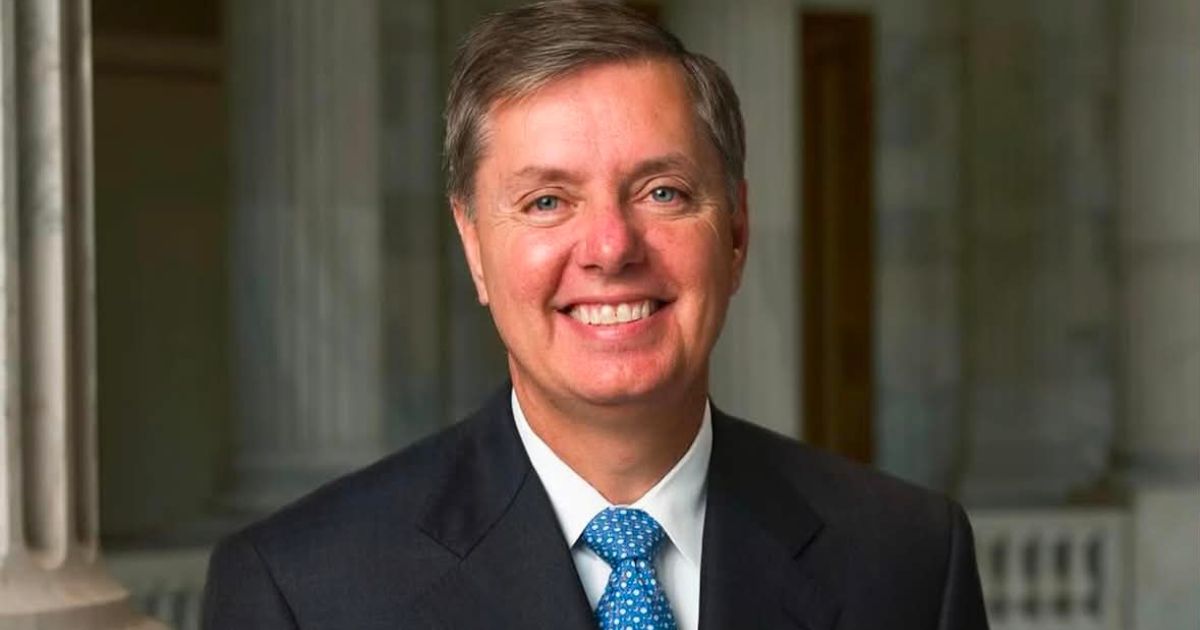
New information has emerged about Senator Lindsey Graham’s final hours, painting a clearer picture of the events leading up to his sudden death at the age of 71.
According to new reports, the longtime South Carolina senator spoke with President Donald Trump on Saturday evening, acknowledged that he was not feeling well during another conversation, and planned to seek medical attention the following morning before tragedy struck just hours later.
Graham’s office announced that he died on the evening of July 11 after what it described as a “brief and sudden illness.” Since then, additional reports have provided new insight into his final conversations, the emergency response at his Washington, D.C., home and the medical findings released after his death.
Final conversations before the medical emergency
Axios reported that Graham spoke with President Trump by telephone on Saturday night, discussing his recent visit to Ukraine as well as issues he hoped to continue working on, including Russia sanctions and developments involving Iran.
According to the outlet, another person who spoke with Graham shortly afterward said the senator mentioned that he was feeling unwell.
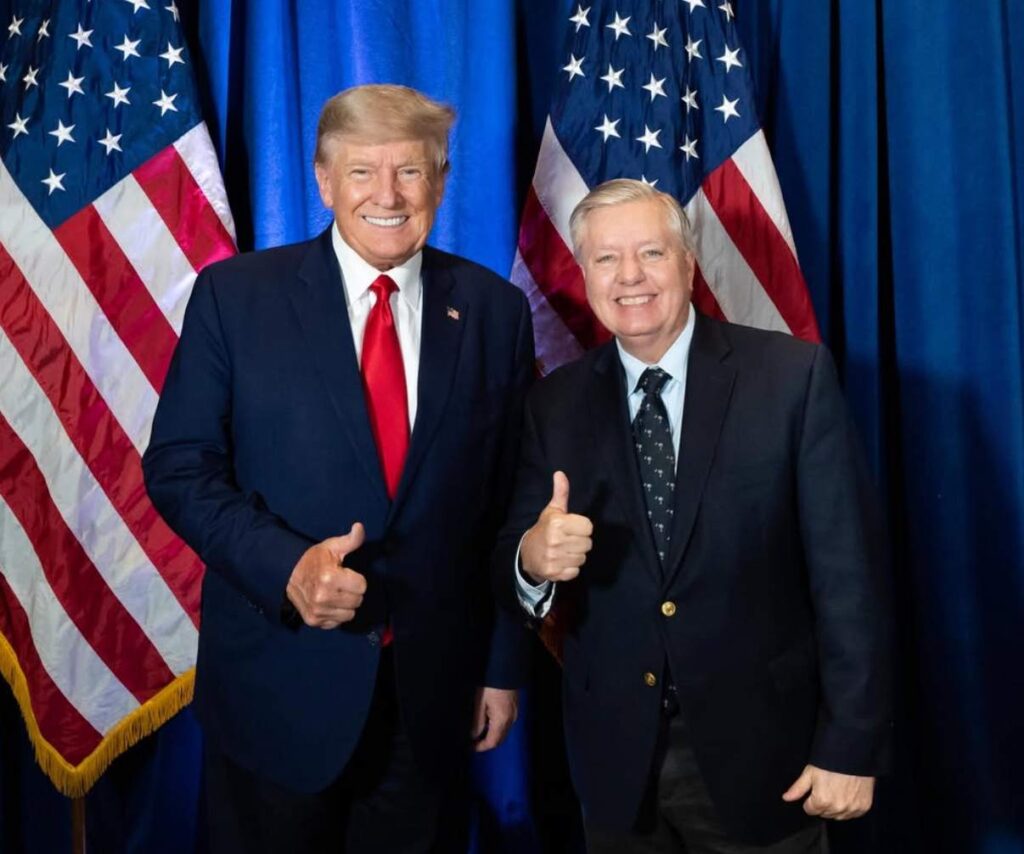
When he was encouraged to seek immediate medical attention, Graham reportedly replied that he planned to visit a doctor after his scheduled appearance on NBC’s Meet the Press the following morning.
Axios also reported that Graham attempted to lighten the moment with a joke, saying, “I can’t die now. I still need to do the Russian sanctions, get Iran sorted out and do Israeli-Saudi normalization.”
Only a few hours later, emergency crews were called to his home after he suffered a medical emergency.
Emergency response and cause of death
Authorities received a 911 call reporting a cardiac arrest at Graham’s Washington residence at approximately 8:30 p.m. Saturday, according to multiple reports.
Emergency responders rushed to the scene, where efforts were made to save the senator’s life.
Police scanner audio previously reported by The Washington Post indicated that CPR was underway roughly 25 minutes after the initial emergency call.
TMZ later published photographs showing first responders transporting Graham on a stretcher toward an ambulance outside his home.
Subsequent reports revealed that Graham’s cause of death was an aortic dissection caused by arteriosclerotic cardiovascular disease.
According to the Mayo Clinic, an aortic dissection occurs when a tear develops in the inner layer of the body’s main artery, allowing blood to flow between the layers of the vessel. In Graham’s case, reports said plaque buildup had weakened the aortic wall before the tear occurred.
A spokesman for the senator said the death certificate would remain pending until toxicological and microscopic testing had been completed, after which it would be updated with the final cause and manner of death.
Questions and reactions after his passing
Graham’s death prompted widespread tributes from political leaders, while some commentators also discussed the circumstances surrounding his sudden passing.
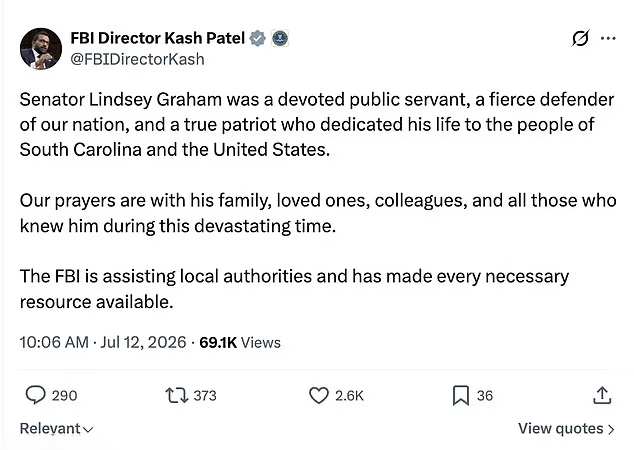
Reports noted that FBI personnel were seen at Graham’s residence following the incident, with Director Kash Patel stating that the agency was providing all necessary resources for the investigation.
Several public figures urged patience while awaiting the completion of the medical examination.
Megan Mobbs, director of the Center for American Safety and Security at the Independent Women’s Forum, wrote that cardiac arrest explained how Graham’s life ended but did not explain why it happened. She argued that a complete forensic examination and additional testing were necessary to provide certainty.
Other commentators pointed toward medical explanations.
Townhall columnist Dustin Grage wrote that a source had told him Graham had dealt with blood pressure issues since his 40s and noted that the senator’s father also died from cardiac arrest at age 69. He added that not every sudden death should immediately be viewed as a conspiracy.
Conservative radio host Dana Loesch agreed, commenting that although Graham’s death was sudden, cardiac conditions often are.
Tributes continue to pour in
President Donald Trump described Graham as “one of the greatest people and Senators” he had ever known, calling him “a true American Patriot” in a tribute shared on Truth Social.
Vice President JD Vance also honored Graham, saying the senator “fought like hell for the things he believed in” and stood by those around him when it mattered.
Congressman Jim Clyburn, South Carolina’s lone Democratic member of Congress, also offered condolences, saying that although they often disagreed politically, their relationship remained respectful and productive on behalf of the people of South Carolina.

Graham had recently returned from Ukraine, where he met President Volodymyr Zelensky and visited a drone production facility during what would become one of the final official trips of his long career.
His death brought to a close decades of public service that included military service, years in the House of Representatives and more than two decades in the U.S. Senate, where he became one of the country’s most recognizable Republican voices.