During what I believed were the best years of my life, my husband began feeling unwell. At first, neither of us thought much of it. He worked incredibly hard and his job could be stressful, so we assumed the fatigue and discomfort were simply the result of that.
But as the weeks went by, his condition became more serious, and he eventually agreed to see a doctor. That visit changed everything. The tests revealed that he had cancer, and the news completely crushed us.
What followed were months filled with treatments, hospital visits, and medications. We tried to stay hopeful and believed that the doctors would eventually find something that worked, but the cancer spread to other organs and the situation quickly worsened.
Eventually the doctors told us there was nothing more they could do and that he had only days left to live. I remember sitting there in disbelief, realizing how suddenly life can change when you least expect it.
After my husband passed away, I struggled to accept what had happened. In the beginning, friends and relatives visited often, bringing food and trying to comfort me, but as time passed they slowly returned to their normal lives. Eventually the house grew quiet again, and it was just my stepson and me trying to move forward after the loss.
The Bond We Shared
I married my husband when his son was still very young. I never tried to replace his mother, but over time I naturally became a mother figure in his life.
The truth is that we had always been very close. In many ways he felt more comfortable talking to me than he did with his father, and I was grateful for the bond we shared. I had been the one who drove him to school every day, who attended his recitals and games, and who tried to be there for every important moment as he grew up.
When his father died, that connection became even more important. At the same time, I knew he was nineteen and just beginning his own life.
Eventually he would leave the house, start his own career, and build a future for himself. But while he was still living at home, part of me began to feel that he should help contribute to the household expenses, especially since things had become more difficult financially after my husband’s death.
One evening I decided to talk to him about it. I explained that things were tight and asked if he could contribute five hundred dollars a month to help cover expenses. To me it didn’t seem like an unreasonable request, and I honestly expected that he would understand.
The Argument That Changed Everything
Instead, his reaction caught me completely off guard. He became angry almost immediately and accused me of trying to take advantage of him. The frustration in his voice and the look in his eyes were so intense that it genuinely scared me.
I kept thinking about how this was the same young man who had stood beside me through months of hospital visits while his father was fighting for his life.
What hurt me most, however, was when he called me “childless.” Of course I knew I didn’t have children of my own, but hearing it said so bluntly felt like a deep wound.
In my heart I had always thought of him as my child. I had been the one who drove him to school for years, the one who showed up to every recital and every game, and the one who tried to support him through everything.
Yet in that moment I didn’t argue back. For reasons I still struggle to explain, I simply nodded and went to bed. I felt exhausted, hurt, and unsure of what to do next.
The Decision I Regret
The next morning I made a decision I’m not proud of. Feeling overwhelmed by grief and fear about my future, I changed the locks on the house.
I convinced myself that I was simply protecting what little stability I had left. At the same time, I decided to pack up my stepson’s belongings from his room, telling myself that maybe seeing his things packed would make him realize how far the argument had gone.
Walking into his room felt strangely uncomfortable, even though I had cleaned it countless times over the years. This time it felt as if I were intruding on something private.
Still, I began folding his clothes and placing his books into boxes I found under his desk. As I worked, I tried to ignore the small reminders around the room that showed he was still just a young man learning how to cope with the loss of his father.
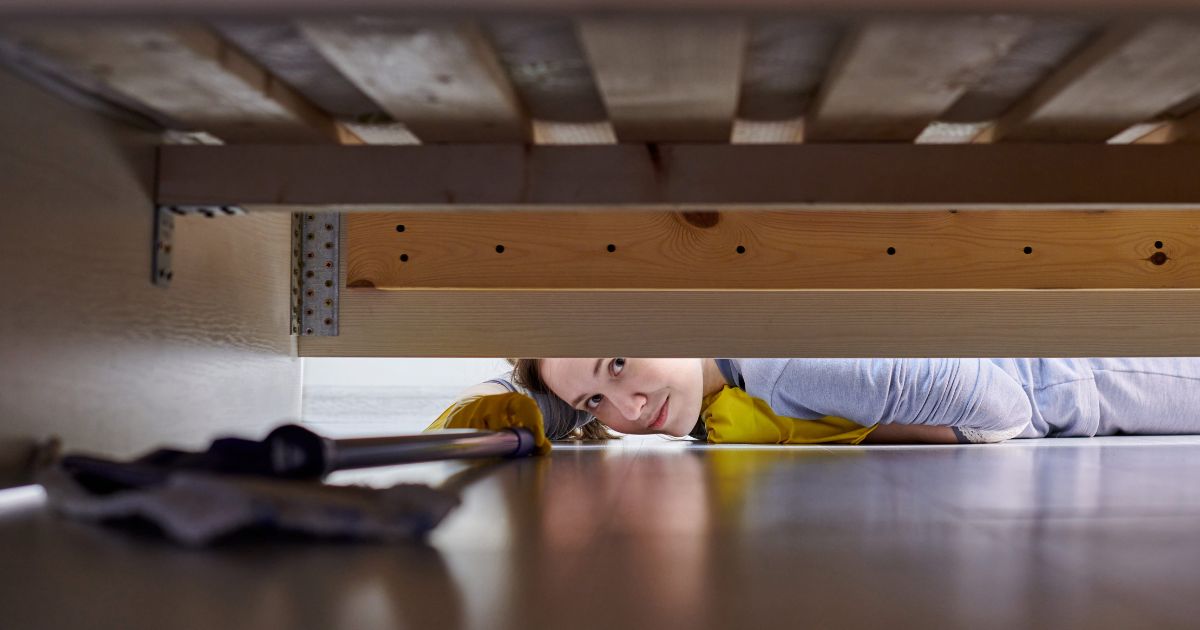
At one point I knelt down to look under the bed, not because I was searching for anything specific but simply out of habit. That was when my hand brushed against something soft and heavy pushed into the far corner.
The Bag With My Name On It
It was a duffel bag. When I pulled it out, I noticed something that immediately confused me—my name was written on it. My hands trembled slightly as I opened it, unsure of what I might find inside. What I discovered was an old savings account passbook, the kind people used years ago before everything became digital.
At first I didn’t fully understand what I was looking at, but as I flipped through the pages I began to see deposit after deposit listed there. Twenty dollars, thirty dollars, sometimes a hundred—small amounts that had been added consistently over the past four years. The deposits came from summer jobs, weekend work, and birthday money. My stepson had been quietly saving.
Then I saw a note written among the pages that completely stopped me.
It said: “Mom’s retirement fund.”
Seeing that word—Mom—made my chest tighten. I sat there holding the passbook, suddenly realizing what he had been doing all this time. Inside the bag there was also an envelope with a message written on the front: “For her birthday. Don’t chicken out this time.” My birthday was only five days away.
The Letter That Changed Everything
I knew the envelope wasn’t meant to be opened yet, but I couldn’t stop myself. Inside was a letter written in his handwriting. He explained that he knew how difficult things had been since his father died and that he understood the pressure I was under financially and emotionally. He even mentioned knowing that I sometimes worried about growing old alone without anyone around to care for me.
Then he wrote something that completely broke my heart.
He said that I had given up everything to take care of his father during his illness and that I had never complained once. He reminded me that I didn’t have to love either of them the way I did, but that I chose to anyway.
The last part of the letter was the hardest to read. He wrote that wherever life took him, there would always be a place for me in his home because I was the only mother he had ever truly known. He promised that I would never be alone.
In that moment, the argument from the night before felt painfully small. For four years he had been quietly saving money for my future, and I had assumed the worst about him.
When He Came Home
When he came home later that evening, he hesitated at the door as if he wasn’t sure whether he should come inside. I opened it while holding the duffel bag, and the moment he saw it his expression changed.
“You went through my room,” he said.
I nodded and told him that I had found what he had been doing all this time. He looked embarrassed, almost as if he felt uncomfortable about the kindness he had tried to hide. We didn’t say much after that. I simply apologized, and somehow, in that quiet moment, the house finally began to feel like home again.
Conclusion
Relationships between stepparents and stepchildren can be complicated. Misunderstandings, grief, and unspoken emotions can easily lead to painful moments, especially after a major loss. But family is not defined only by biology. Sometimes it is built through years of shared experiences, patience, and the choice to care for one another even when things become difficult.
In the end, what matters most is the willingness to forgive, to listen, and to remember that love can exist in ways we don’t always immediately see.