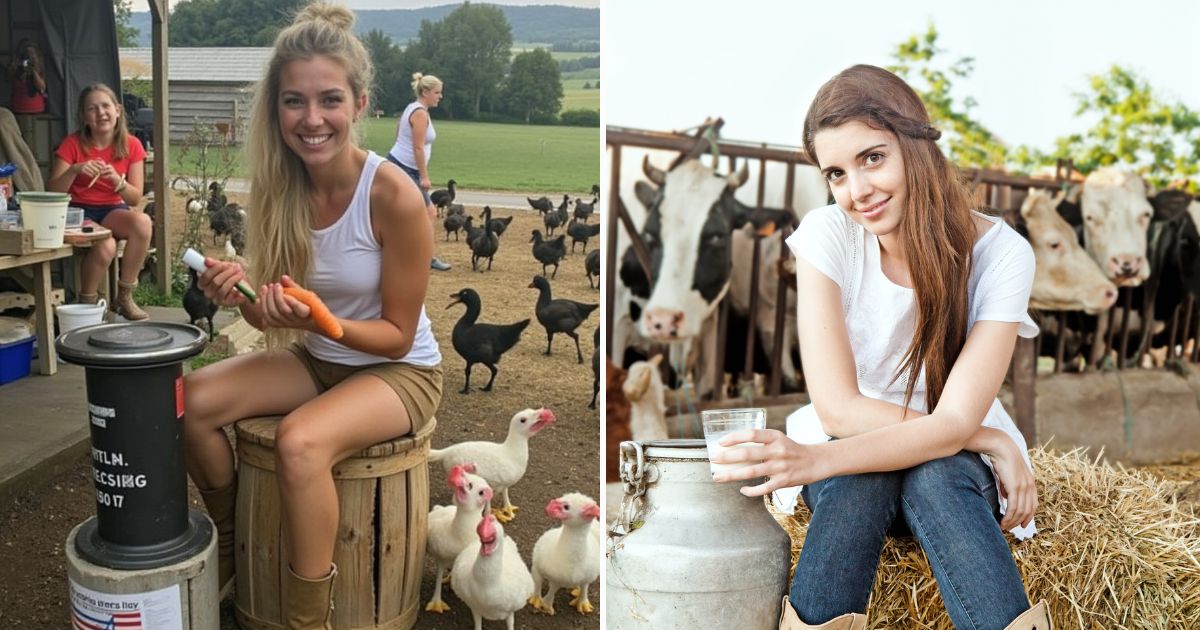
The day for us always began before the sun even considered rising. My father would be out in the barn with the cows before 5 a.m., and my mother was already peeling, boiling, or kneading something for the farmer’s market. I grew up with dirt under my fingernails and the constant hum of tractors outside my bedroom window.
In our world, “vacation” wasn’t beaches or theme parks. It was the county fair, where my brothers and I proudly carried in sweet potatoes, squash, and pies to compete for blue ribbons. The air smelled of earth and work, but also of pride.

I thought that kind of life, honest, unpretentious, and demanding, was something people respected. Turns out, when I left the farm, it became something others mocked.
The City School Dream That Soured
When I earned a scholarship to a private high school in the city, I thought my life was about to change. It was the kind of place where students carried designer backpacks, drove their own cars, and vacationed in Europe for spring break. I walked in on the first day wearing my cleanest jeans, sneakers scuffed from gravel roads, and a flannel shirt my mom had ironed.
By lunchtime, I was “the farm girl.”
It started with whispers.
“Ew, do you live on a farm or something?” one girl giggled behind her glossy ponytail.
“What kind of shoes are those?” another boy sneered, staring at my thrift-store sneakers.
One even leaned over in math class and smirked, “So… did you ride your tractor here?”
I wanted to tell them that back home, I wasn’t a joke. I was Mele. I could patch a tire in ten minutes flat. I could wrangle chickens when they broke out of the pen. I knew how to sell out our stall at the market before noon. But in that school, I stayed quiet. I buried myself in homework and never mentioned the farm again.
Still, shame clung to me. It was as if the smell of hay and sweet potatoes never washed out, no matter how hard I tried.
The Fundraiser That Changed Everything
The school held a fundraiser every spring. Students were expected to bring something “from home” to sell. Most kids came with glossy trays of cookies, baked, or more likely bought, by their nannies. A few had crafts, perfectly painted pottery, or branded school hoodies.
I had nothing like that.

The night before, I asked my mom what I should do. She just smiled, dusted flour from her apron, and said, “Bring them a piece of us.”
The next morning, I walked into school with six sweet potato pies—our family’s recipe, the one that shows up on every holiday table, seasoned just right with cinnamon and nutmeg. The pies were warm, golden, and smelled like home.
I set them on the table, half-expecting no one to touch them. But within minutes, students crowded around. Slices disappeared. Teachers came back for seconds. By the time the lunch bell rang, every pie was gone.
I stood frozen behind the empty table, stunned. For the first time, the thing that embarrassed me was the very thing they wanted more of.
The Unexpected Ally
That’s when Ms. Bell, the guidance counselor, appeared at my side. She was holding an empty paper plate and smiling wide. “Mele,” she said, “do you realize what you just did? You brought more heart and soul into this room than all the money in these hallways combined.”
Her words sank in, but before I could answer, someone else stepped up.
It was the same boy who had once mocked me about tractors. This time, his face was serious. He looked me in the eye and asked, “Do you think you could teach me how to make that pie?”
I nearly dropped the fork I was holding. He wasn’t laughing. He was sincere.

That moment shifted something inside me. I wasn’t just the farm girl anymore. I was the one who had something real, something no trust fund or vacation home could buy.
Owning Who I Am
From that day on, I stopped hiding. When classmates asked about my weekend, I told them the truth: that I had mucked stalls, planted rows of beans, or helped my mom at the farmer’s market. Some still snickered, but others leaned in, curious. I started bringing produce for teachers. Friends asked me about farm animals. And slowly, the ridicule softened into respect.
The farm hasn’t just made me tough. It’s made me proud. I know the value of a hard day’s work, of sweating for something that feeds people. I know that “less” in some people’s eyes is actually more, the kind of more that lasts.
Today, I still wake up with the smell of sweet potatoes in my memory and dirt under my nails. But I don’t bury that part of me anymore. It’s the root of everything I am.
And every time I bake that pie, I remember the day when being a farmer’s daughter finally turned from my greatest shame into my greatest strength.