
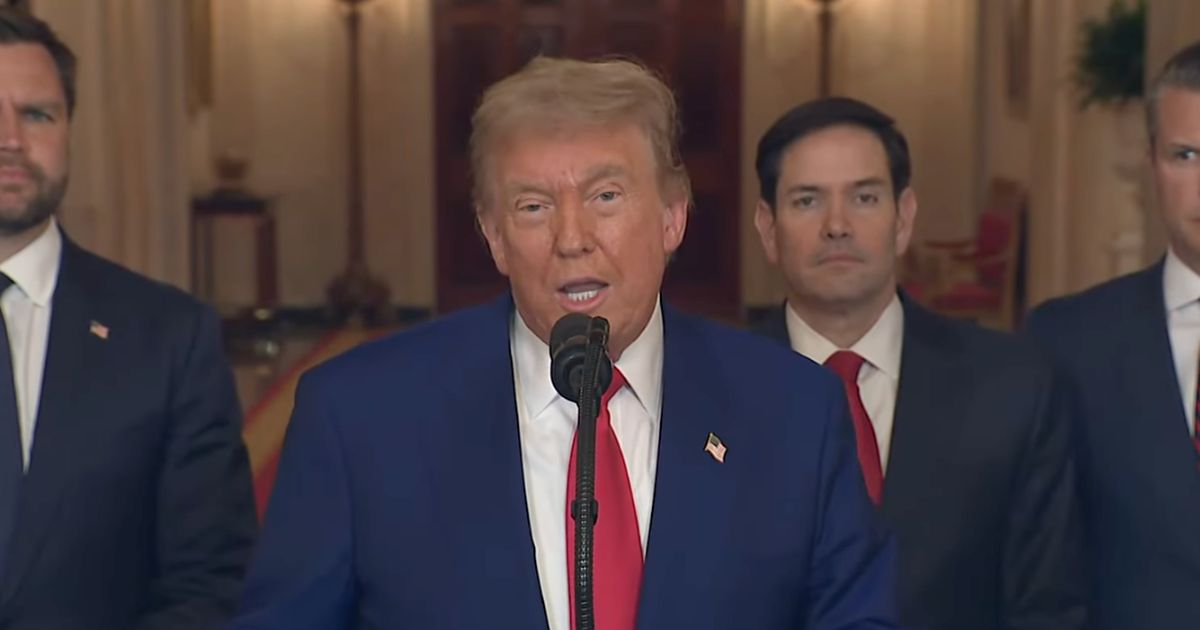
Trump Stuns the World with Surprise Ceasefire Deal Between Israel and Iran: “The 12 Day War Is Over”
In a move that has left the world in disbelief, former U.S. President Donald J. Trump announced on Truth Social what he described as a “Complete and Total Ceasefire” between two of the Middle East’s most volatile adversaries: Israel and Iran.
According to the post, a phased peace agreement will bring an official end to what he dubbed “The 12 Day War,” a brief but terrifying eruption of hostilities that threatened to engulf the region in wider chaos.
While formal confirmation from Israeli or Iranian officials is still pending, Trump’s declaration has already reshaped headlines and revived debates over diplomacy, legacy, and power.
From Escalation to Resolution: How It Allegedly Happened
Just days ago, the region was teetering on the edge of catastrophe. Missile exchanges, air raids, and cyberattacks had escalated to unprecedented levels. Israel’s Iron Dome was under relentless pressure. Iran’s military sites suffered devastating hits. Civilians on both sides braced for the worst.
But behind closed doors, something unexpected may have been brewing.
According to insiders close to Trump’s circle, the former president had been in communication with unofficial intermediaries on both sides. Leveraging relationships formed during his presidency—where he famously helped broker normalization deals between Israel and several Arab nations—Trump reportedly worked through Gulf State channels and backdoor diplomacy to press for an immediate halt to the fighting.
In his public statement, Trump praised both countries for their “Stamina, Courage, and Intelligence,” asserting that without the ceasefire, the war could have “destroyed the entire Middle East.”
Critics Roll Eyes, Supporters Call It ‘Vintage Trump’
Reaction to the announcement has been polarizing, as always. Detractors argue that Trump is exaggerating his role, or that the ceasefire lacks verification. Some point to the lack of official statements from Tehran or Jerusalem as proof that this may be more optics than diplomacy.
But supporters see it differently.
They argue that Trump’s unique style—bold, brash, and unorthodox—may be exactly what broke the stalemate. He wasn’t constrained by bureaucracy or institutional caution. Where others hesitated, he acted. They recall his unconventional but successful diplomatic overtures to North Korea, or his Abraham Accords that shifted decades-old alliances.
And in this case, his gamble may have paid off again.
“The 12 Day War”: A Flash of Fire, a Lesson in Restraint
The term “12 Day War” might now become part of global memory—a conflict that could’ve spiraled but didn’t. Whether Trump’s role was primary, peripheral, or something in between, the fact remains: the guns are allegedly going silent. And for the people of Israel, Iran, and the broader Middle East, that’s what truly matters.
Whether this peace will hold is yet to be seen. But for now, the world has been offered a pause. A window of reflection. And for many, that’s more than they dared to hope for just a few days ago.
Final Word
“God bless Israel, God bless Iran, God bless the Middle East, God bless the United States of America, and God bless the World,” Trump’s post concluded.
Hyperbole or not, the sentiment resonates. In an age of cynicism and conflict, the idea that peace—however fragile—can still surprise us is perhaps the biggest headline of all.


