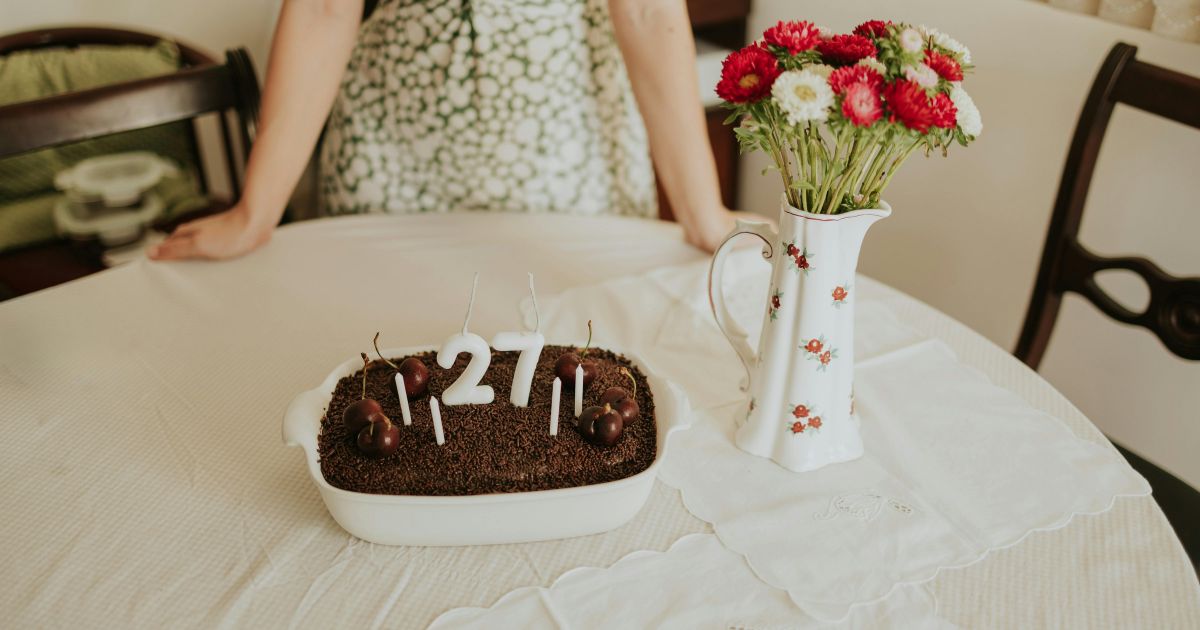
My stepmom showed up to my birthday dinner with a homemade cake, even though she hadn’t been invited, and the moment I saw her standing at the door, I felt a wave of frustration that I didn’t even try to hide.
The dinner was being held at my mom’s house, and I had made it very clear beforehand that I only wanted my dad there. It wasn’t about being dramatic—it was about wanting one evening that felt simple, without tension or complicated history sitting at the table.
So when she appeared, holding a cake as if she belonged there, it felt like she had ignored everything I had asked for.
“I didn’t invite you,” I said, more sharply than I intended. “This is for family only.”
She didn’t argue or defend herself. Instead, she just gave a small, calm smile, handed the cake to my dad, and said that it was fine—that she only wanted to drop it off and that we should still cut it later—before turning and leaving without making a scene.
At the time, I told myself it was just another attempt to insert herself into something that wasn’t hers. I assumed the cake was her way of staying involved, even after being turned away.
My dad stayed, but he was unusually quiet throughout dinner. He barely spoke, avoided eye contact more than once, and seemed distracted in a way I couldn’t quite place, though I chose not to question it because I didn’t want to reopen what had already been an uncomfortable start to the evening.
What I Found Inside the Cake Changed Everything
Eventually, someone suggested bringing out the cake she had left behind. I hesitated briefly, but I didn’t want to make another issue out of it, so I agreed.
When I began cutting into it, I noticed almost immediately that something felt wrong. The knife didn’t glide through the way it should have, and there was a slight resistance that made me pause.
As I pressed down more firmly and lifted the first slice, I saw why. Hidden inside the center was a small container.
The room went quiet, and suddenly everyone’s attention shifted toward me. I set the knife down and carefully opened it, my hands unsteady in a way I couldn’t explain.
Inside, there was a stack of old photographs wrapped in plastic, along with a folded letter that had my name written across the front in my stepmom’s handwriting.
For a moment, I just stared at it before slowly unfolding the paper.
The letter wasn’t long, but it was thoughtful. She wrote that she knew I didn’t consider her family and that she respected that, but there were things she felt I deserved to know—things she had stayed quiet about for years.
When I looked down at the photographs, my chest tightened. They were from my childhood—family trips, birthdays, ordinary days that I barely remembered clearly anymore.
But then I noticed something I had never really paid attention to before. She was in some of them.
Not in the center, not posing, but there—standing off to the side, in the background of birthday parties, group outings, and gatherings. It took me a moment to realize why.
She hadn’t been a stranger who came into our lives later.
She had been someone my parents knew long before they separated—a family friend, someone who had been around in small, almost invisible ways.
I slowly looked up at my dad, and the way he avoided my eyes told me everything I needed to know. The letter explained the rest.
She wrote that after my parents’ marriage ended, she and my dad reconnected and eventually built a life together, but she had always been careful not to overstep, knowing I already had a mother and that her place in my life was complicated.
“I never wanted to take anyone’s place,” she wrote. “I just didn’t know how to show up for you without making things harder.”
At the bottom of the letter, there was one final line:
“I know I’m not your mother, and I never tried to be, but I have cared about you for longer than you realize.”
I sat there holding the letter, feeling something shift in a way I hadn’t expected.
It wasn’t anger, and it wasn’t forgiveness.
It was the quiet realization that the story I had been holding onto for years was incomplete, and that sometimes people exist in the background of our lives long before we understand the role they’ve played.