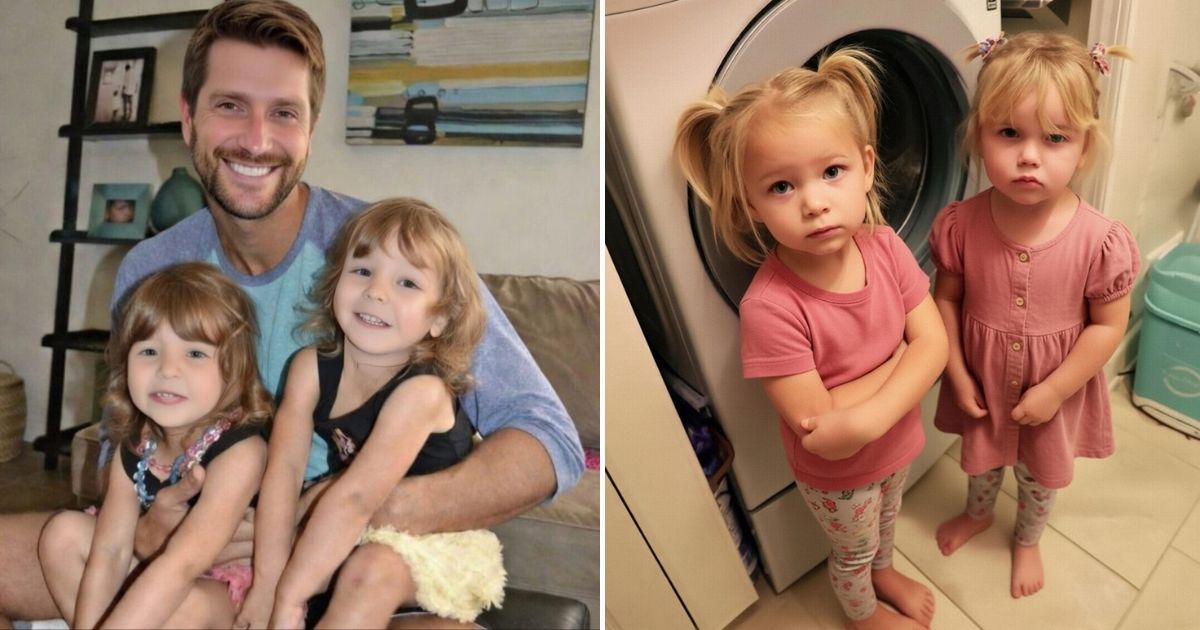
The Breaking Point
Some nights, after I finally get the twins to sleep, I sit in the quiet and wonder how much longer I can keep it all going.
I’m 34, an IT freelancer who works from home, raising my three-year-old twin daughters, Bella and Lily. Their mom left when they were still in diapers. She said she wasn’t “cut out for motherhood,” packed a bag, and left us on a rainy Wednesday afternoon.
I thought it would crush me. But I learned to adapt — bottles balanced between conference calls, nap times synchronized with deadlines. I built a rhythm around chaos.
Then this year hit, and it felt like the universe decided to see how much I could take before breaking.
The daycare closed with no warning. My client cut my pay by twenty percent. My mom needed surgery Medicare wouldn’t fully cover. Rent went up. And as if that wasn’t enough, our washing machine died.

For three days, I washed our clothes in the bathtub with dish soap. My hands split open from the scrubbing, and every load felt like a reminder of how close we were to falling apart.
The Woman in the Floral Blouse
On the fourth day, I bundled Bella and Lily into their stroller and walked the two miles to a used appliance shop. The twins sang to each other the whole way, their voices like sunshine through exhaustion.
Inside, the store smelled like dust and oil. Rows of dented machines sat under buzzing fluorescent lights. I found a scratched-up Whirlpool washer with a “$120 – AS IS” tag.
While I crouched down to inspect it, a woman appeared, maybe late fifties, short silver hair, floral blouse, the kind of calm presence that fills a room without trying. She smiled down at the girls.
“They’re adorable,” she said softly. “Twins?”
I nodded. “Yeah. Double trouble.”
She chuckled, then asked where their mother was. I hesitated but told her the truth.
“She left when they were babies. It’s just me now.”

Her expression shifted — compassion without pity. She reached out and gently touched the edge of the stroller. “You’re doing a good job,” she said quietly. “Don’t forget that.”
Before I could reply, she was gone, disappeared into the maze of washing machines and fridges like she’d never been there.
I paid for the Whirlpool, loaded it onto a dolly, and pushed it the long way home. My back ached, but I felt oddly lighter, like her words had carved out a small space where hope could breathe.
The Box in the Washer
That night, after putting the twins to bed, I went to hook up the washer in the corner of our kitchen. The hoses hissed as water filled the drum. I hit the spin cycle. The machine whirred, then rattled, hard.
“Come on,” I muttered, giving the top a frustrated smack.
It thumped once, then stopped completely.
I cursed under my breath, grabbed a flashlight, and pried open the drum. Something metallic caught the light inside. A small, square box wedged near the base. I tugged it free.
It was a jewelry-style box, pale blue with gold trim. On top, a folded note in elegant cursive:
For you and your children – M
My heart skipped. My hands were trembling as I lifted the lid.

Inside was a thick envelope, bound with ribbon. I opened it and stared.
Hundred-dollar bills. Dozens of them. I counted once, then again. $5,000.
At the bottom was another note, written on a small card:
When my husband died, we sold his appliances. I hid this for the next person who needed it more than we did. Please use it well.
My legs gave out. I sat right there on the floor, the open box beside me, staring at the twins’ artwork taped to the fridge.
The Miracle in the Drum
The next morning, I bought groceries, real groceries, not just cereal and instant noodles. I paid my mom’s overdue bill. I fixed the heater. For the first time in months, I didn’t feel like I was drowning.
The twins danced in the living room to “Baby Shark,” giggling as they spun in mismatched socks. I looked at them and thought of the woman in the floral blouse.

Was it her? Was she the one who left the note?
I went back to the store two days later, but no one knew who I meant. “We get a lot of walk-ins,” the clerk said. “Floral blouse? Could be anyone.”
I’ve replayed that day a hundred times since. Maybe she wasn’t just another shopper. Maybe she was the widow herself, the one who wrote the note and left the money. Maybe she came back just once, to make sure it reached the right person.
Whoever she was, she changed our lives.
The Whirlpool still doesn’t spin right, but I don’t care. Every time it clunks, I think about that box, about the kindness hidden in the noise of ordinary life.
Now, when Bella and Lily giggle over bubbles during bath time, I tell them, “You never know where good people are hiding.”
And I mean it. Because sometimes, grace shows up in the last place you’d ever look,
right inside an old washing machine.