When my phone buzzed that Tuesday afternoon, I expected a sweet message from Sarah, our 23-year-old granddaughter who is getting married in a few months. Instead, what I saw left me frozen.
“Grandma,” the text read, “I need $5,000 for my bachelorette trip. I expect it by Friday. You can wire it to my account. Don’t make this difficult.”
No “please,” no “thank you,” not even a trace of warmth. Just a demand. My hands shook as I showed the message to my husband, Mark. His face darkened in disbelief. “After everything we’ve done for her,” he muttered, “this is how she talks to us?”
We had supported Sarah through so many milestones, from gifting her a down payment for her first car to covering part of her tuition one semester when her financial aid fell short, and even handing down heirloom jewelry once worn by her great-grandmother. To see such entitlement in her words stung like nothing else.
Remembering the Past, Facing the Present
Mark and I spent that evening talking through the memories. I recalled the time Sarah was just a little girl, curled up in the quilt I sewed by hand for her eighth birthday. I remembered the joy on her face when we surprised her with the keys to a used Honda Civic during her senior year of high school.

These weren’t grand gestures for us, they were sacrifices. We aren’t wealthy people. Each gift came from careful saving and a deep desire to help our granddaughter start her adult life with love and support.
But reading that message, I couldn’t help but feel invisible. It wasn’t the money that hurt. It was the absence of respect, the assumption that we existed only to fund her desires.
The Decision: A Lesson in Respect
That night, over tea at the kitchen table, we made a choice. “We can’t just send her money,” I said. Mark nodded. “If we do, this behavior will only grow worse. She needs to learn what family truly means.”
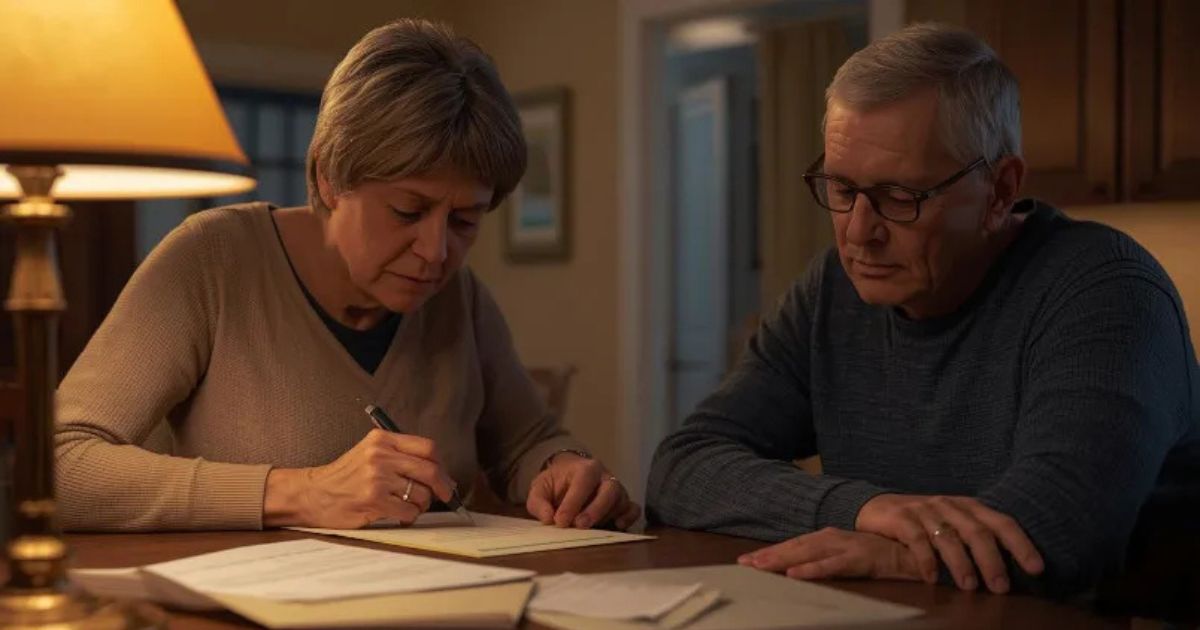
So instead of wiring $5,000, we drafted a letter. Inside, we placed a check, not for five thousand, but for five hundred. Alongside it, we wrote:

“Dear Sarah, we love you more than words can say. But love is not measured in dollars. This check is not for a vacation. It’s for you to start building a life of your own, responsibly. We hope you’ll think about what it means to lean on family — not for what they can give, but for the love they share.“
We mailed it the next morning, our hearts pounding.
The Aftermath: Silence, Then Reflection
For two days, there was silence. No calls. No texts. I admit I worried. Had we just driven a wedge between us and the granddaughter we adored?
Then, late Friday evening, a message finally came. It wasn’t angry. It wasn’t demanding. It was shaky, almost uncertain:
“Grandma, Grandpa… I’m sorry. I shouldn’t have texted you like that. I don’t know what got into me. I’ve been so stressed with wedding planning, I let it twist me. Thank you for the check. I don’t deserve it, but I’ll use it wisely. Can we talk?”

When I read those words, tears blurred my vision. It wasn’t a perfect apology, but it was a start. Mark smiled faintly and said, “Looks like she’s learning.”
Moving Forward Together
The following weekend, Sarah came by. She hugged us tighter than she had in years. We sat together, and for the first time in a long while, we talked openly about gratitude, about respect, and about how easy it is to lose perspective when the world pressures you to have “the perfect life.”
We told her that her wedding would be beautiful whether or not she spent a dime on some extravagant trip. What truly mattered was the love she and her fiancé shared, and the family standing beside her.
Sarah listened quietly, nodding, tears in her eyes. She promised to do better, to remember that money is fleeting but family is forever.
That night, after she left, Mark and I held hands across the kitchen table, feeling lighter than we had in weeks. We didn’t just protect our savings, we reminded Sarah of the values we’d spent our lives trying to pass down.
And sometimes, that’s the greatest gift of all.