The ones nobody wanted were the ones I loved most
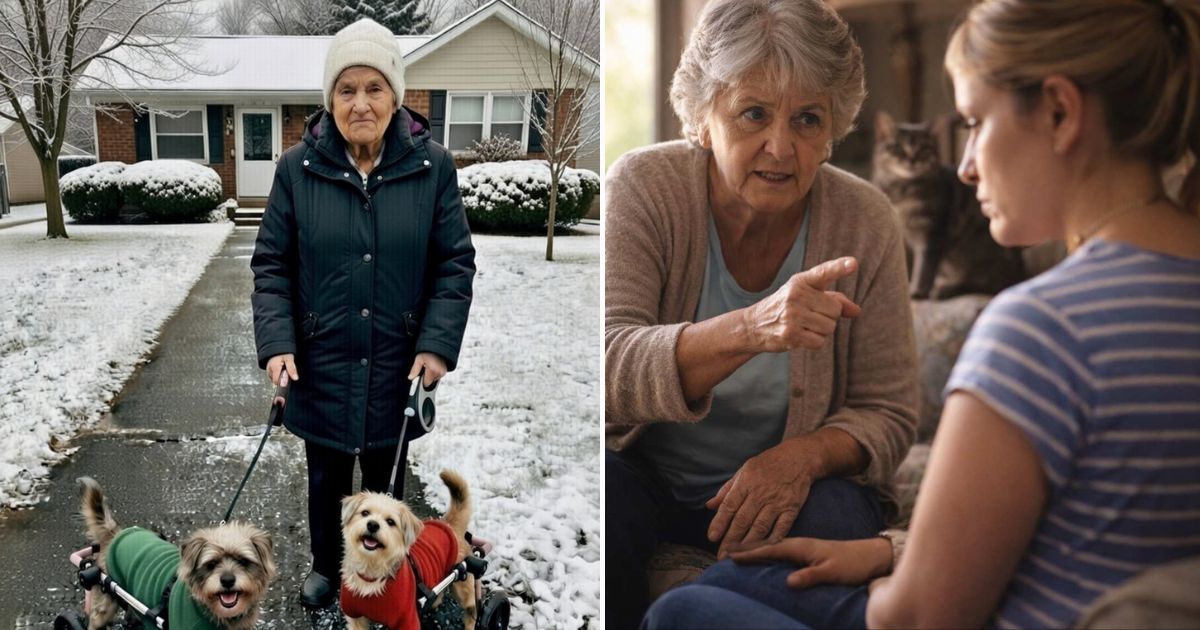
I’m Anna. I’m 72 years old, born and raised in Rochester, Minnesota, and I’ve spent my entire life caring for the ones nobody else wanted.
That’s been true for as long as I can remember. As a girl, I brought home injured birds, limping cats, dogs people said were “too much trouble.” Later, when my husband passed and the house grew quiet, animals filled the space grief left behind. They didn’t judge. They didn’t rush me. They stayed.
The ones who mean the most to me aren’t the perfect ones. They’re the broken ones. The forgotten ones. The ones that don’t fit neatly into anyone else’s idea of normal.
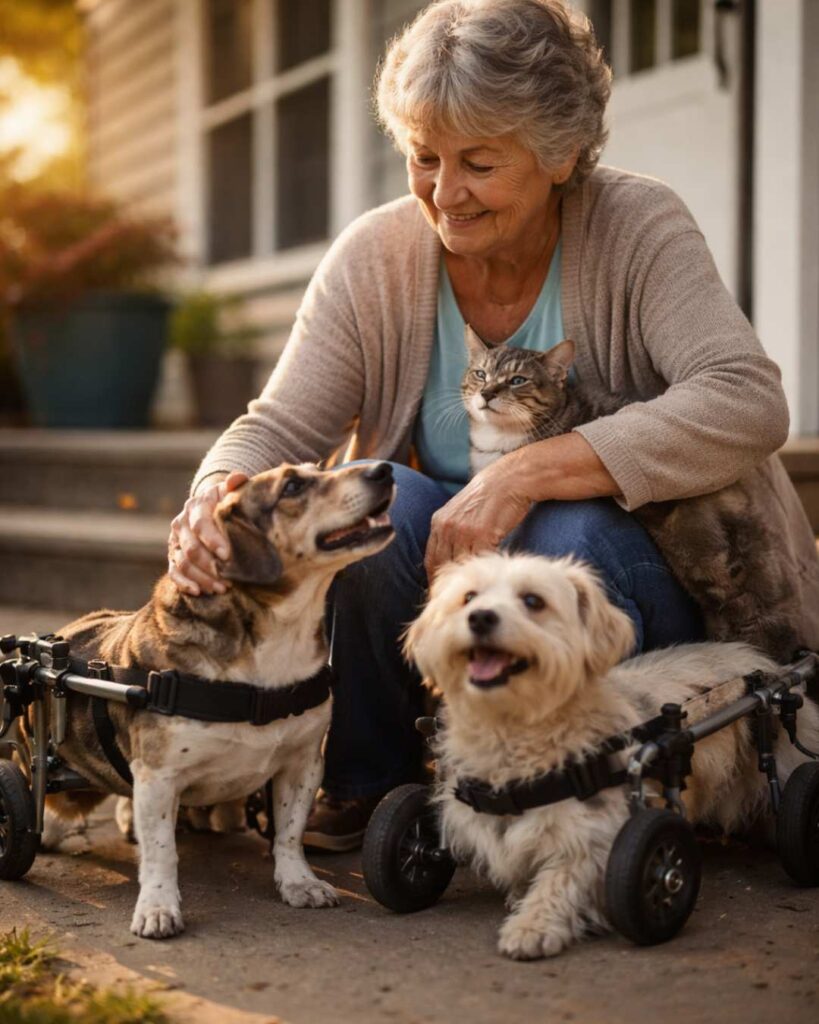
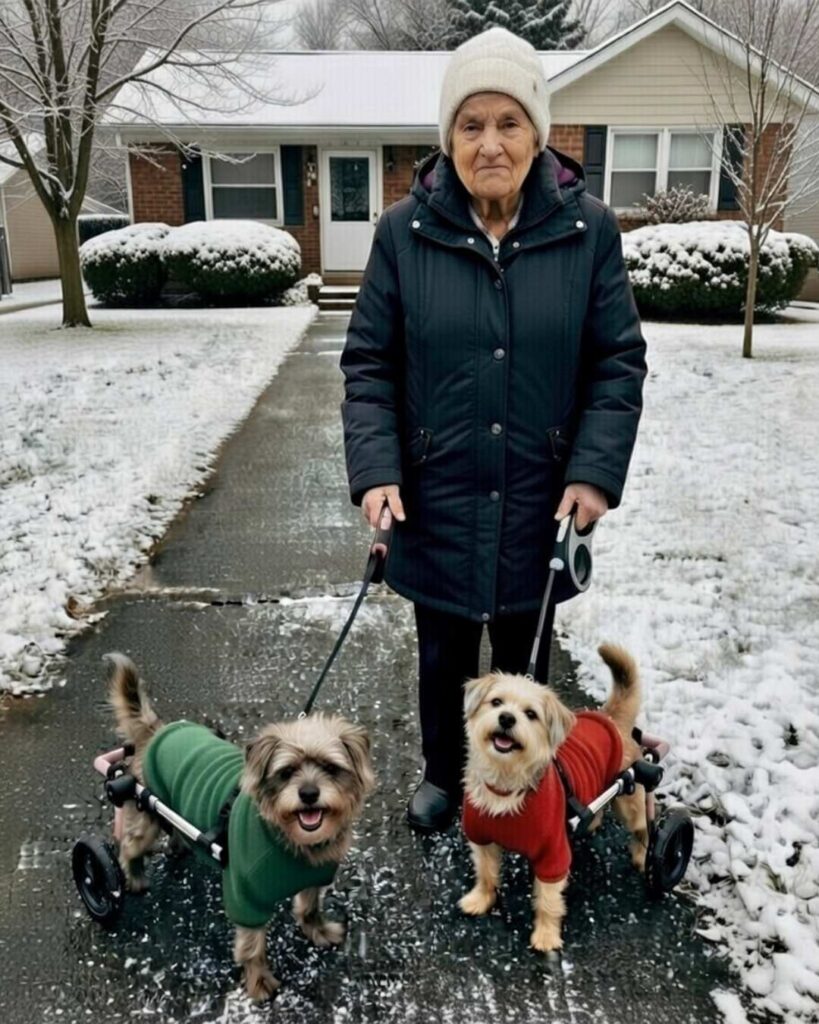
That’s how Toby and Honey came into my life — two small rescue dogs whose back legs no longer worked. Instead of running, they roll. Their little wheel carts click softly against the pavement when we go for walks, and their tails wag like joy is the only language they’ve ever known.
People usually smile when they see them. Strangers stop to ask their names. Children wave. Toby loves everyone. Honey does too. Animals like them don’t survive without love — and they give it back tenfold.
I thought everyone could see that.
I was wrong.
The moment the laughter turned cruel
Last week, I was walking Toby and Honey down our quiet street like I always do when my son John and his wife Helen pulled up. They were visiting for the afternoon.
Helen comes from a wealthy family. She’s always been polished, perfectly dressed, always in control. She tends to boss John around, and while it makes me sad — he’s my only son — I’ve learned not to interfere. Adults choose their own lives.
At first, it was just awkward silence. Then Helen stared at Honey’s wheels like she was looking at something spoiled. Her face twisted.
She didn’t lower her voice. She didn’t hesitate.
“Those dogs are disgusting.”
The word hit harder than I expected. Not anger — shock. I felt small, belittled, standing there holding the leashes of two creatures who trusted me completely. I didn’t argue. I didn’t snap back. I just stood there, trying to understand how someone could say something like that out loud.
Inside the house, Minnie appeared at the door. Minnie is blind. She moves carefully, memorizing the world through touch and sound.
Helen laughed.
“Gosh, this isn’t a shelter,” she said, shaking her head. “People don’t want to see… that. Just get rid of them, Anna.”
She laughed again.
My hands tightened around the leash. For a moment, I felt every year of my age — and then something shifted. Calm settled over me like a blanket. I looked her straight in the eye.
“Bless your heart,” I said evenly. “That dog saved me, not the other way around.”
But I knew then — quietly, clearly — this couldn’t end with a sentence and a smile.
The lesson I chose to teach
I invited Helen inside.
Not to appease her. Not to avoid conflict. But because some lessons need space.
I sat down across from her and spoke slowly, carefully — not angrily, not raised, just firm.
I told her what it means to be vulnerable. What it means to lose health, independence, dignity. I told her how animals like Toby and Honey don’t see themselves as broken — only humans do. I told her how Minnie navigates the world without sight and still greets each morning with trust.
Then I told her something else.
“That laughter,” I said, “that judgment — it says more about you than it ever will about them.”
Helen tried to interrupt. I held up my hand.
“I am not asking for your approval. I am demanding respect.”
The room went quiet.
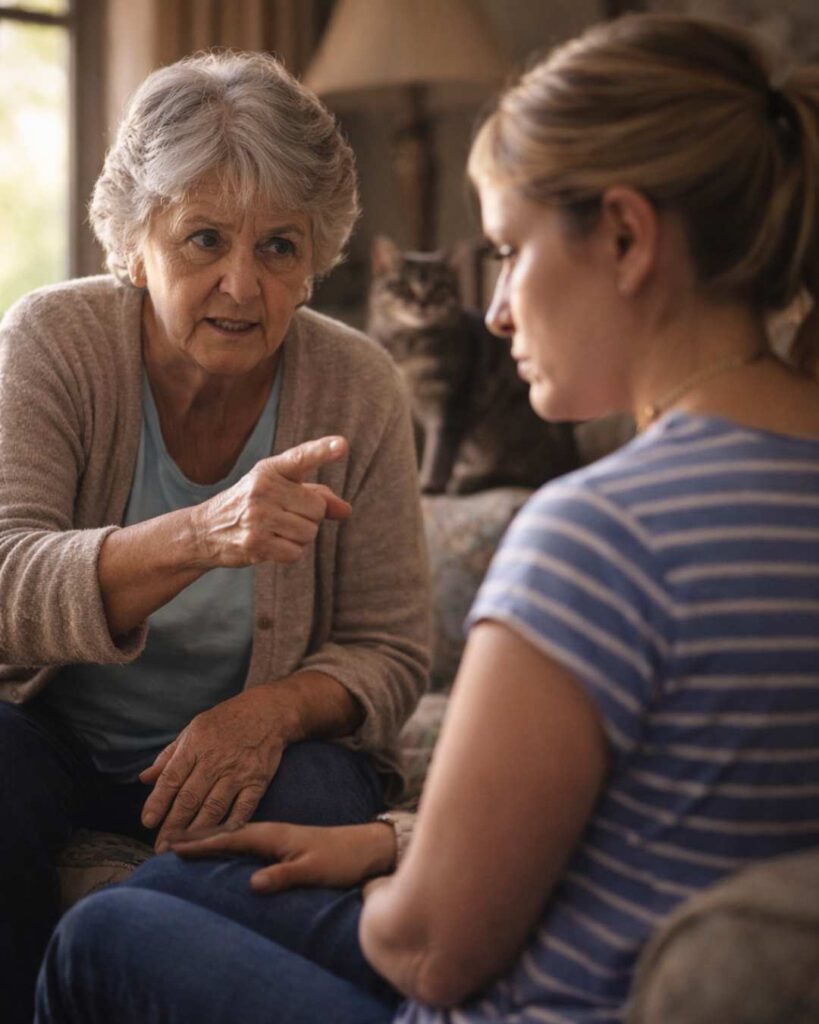
I stood, opened the door, and said words I never imagined saying — but said without regret.
“You are welcome here when you can treat every living being under this roof with dignity. Until then, you need to leave. And you don’t come back without respect.”
John looked stunned. Helen looked offended. But neither argued.
She left.
Why I felt peace afterward
After the door closed, I expected guilt. Or fear. Or doubt.
Instead, I felt relief.
For the first time in a long while, my home felt like mine again — safe, kind, honest. Toby nudged my leg. Honey wagged her tail. Minnie brushed past my ankle.
I didn’t raise my voice. I didn’t insult her. I didn’t humiliate her.
I stood my ground.
At 72, I’ve learned something important: kindness does not mean silence. Compassion does not mean tolerating cruelty. And respect is not optional — especially in a home built on love.
That decision didn’t break my family.
It strengthened me.
And that, more than anything, felt good.