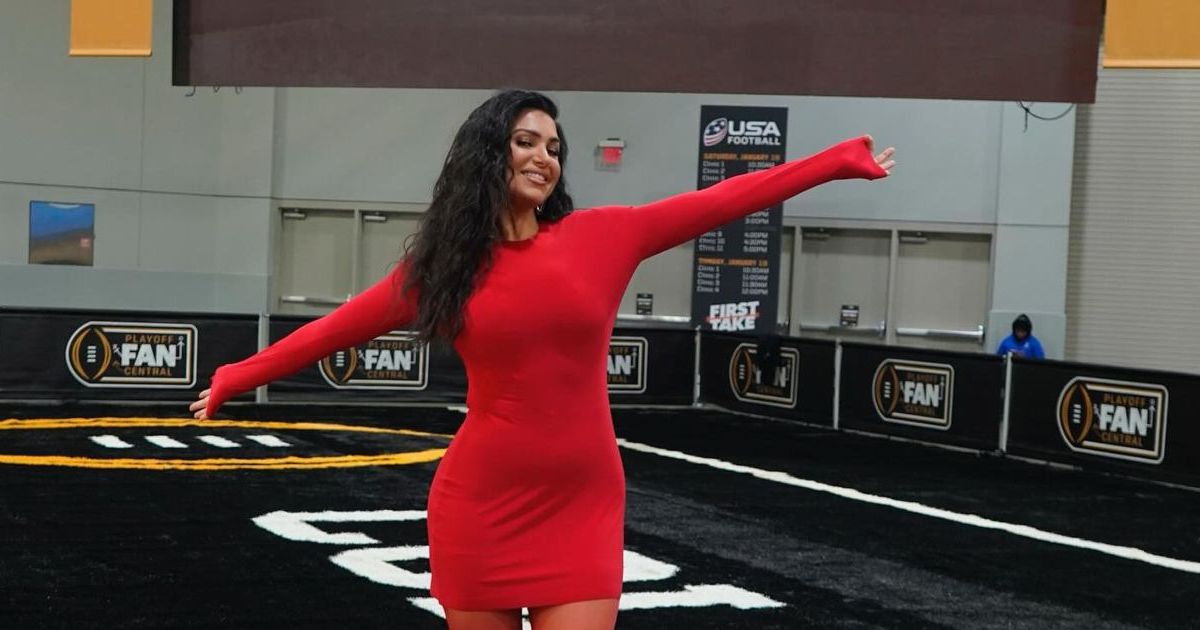
After nearly a decade as one of the most recognizable faces on ESPN’s First Take, Molly Qerim’s sudden departure has become one of the most talked-about stories in sports media — and new details suggest money and influence may have played bigger roles than anyone first realized.
According to multiple reports, Qerim’s contract was set to expire at the end of 2025. Talks regarding a renewed deal and a potential expansion of her role failed to produce an agreement, prompting her immediate resignation.
Executives have described the separation as “amicable,” but insiders say frustration over pay and recognition were key factors.
Shortly after the news broke, Qerim took to Instagram to thank her colleagues and fans, calling her time on First Take “one of the greatest honors” of her career.
Her farewell post hinted at disappointment, noting she had hoped to announce the decision herself — a subtle sign that the exit may have come sooner than planned.
Marcellus Wiley’s Take: “She Felt Undervalued”
Former ESPN host Marcellus Wiley discussed Qerim’s exit on his More To It podcast, alleging that she felt undervalued compared to other prominent ESPN figures and claiming her salary was roughly $500,000 per year which was far less than that of top-tier network personalities.
In comparison, First Take co-host Stephen A. Smith reportedly earns over $20 million annually, while other ESPN anchors like Malika Andrews and Mina Kimes receive seven-figure deals. Wiley suggested Qerim felt her contributions to the network’s top-rated program deserved greater compensation and visibility.
Wiley suggested that Qerim believed Stephen A. Smith’s influence at the network could have been used to advocate for a fairer deal, but that this did not occur. He described her departure as the culmination of “disrespect” and unaddressed disparities in pay.
The Broader Conversation: Pay Equity in Sports Media
Qerim’s exit has reignited debate over pay equity and representation among women in sports journalism. Despite being the face of one of ESPN’s most successful shows, her experience reflects how difficult it can be for female hosts to secure parity with their male counterparts, even on the biggest stages.
Insiders say ESPN offered alternative roles within the company, but discussions over creative control and financial terms broke down completely, leading to her immediate resignation.
What’s Next for Molly Qerim?
Days after leaving ESPN, Qerim resurfaced publicly, moderating a Q&A with UConn men’s basketball coach Dan Hurley which fueled speculation she could transition into broader media or public-speaking ventures outside of sports television.
For Qerim, the decision marks both a professional risk and a fresh start. Whether she joins another network or builds her own platform, her exit has already sparked a larger conversation about how women in sports media are valued and who gets to define their worth.